Why Gold and the Dollar Often Move in Opposite Directions
Live Markets Editorial Team
Human-reviewedUpdated:
See how dollar translation, real rates, inflation expectations, and safe-haven demand move gold, and why the two markets do not keep a fixed correlation.
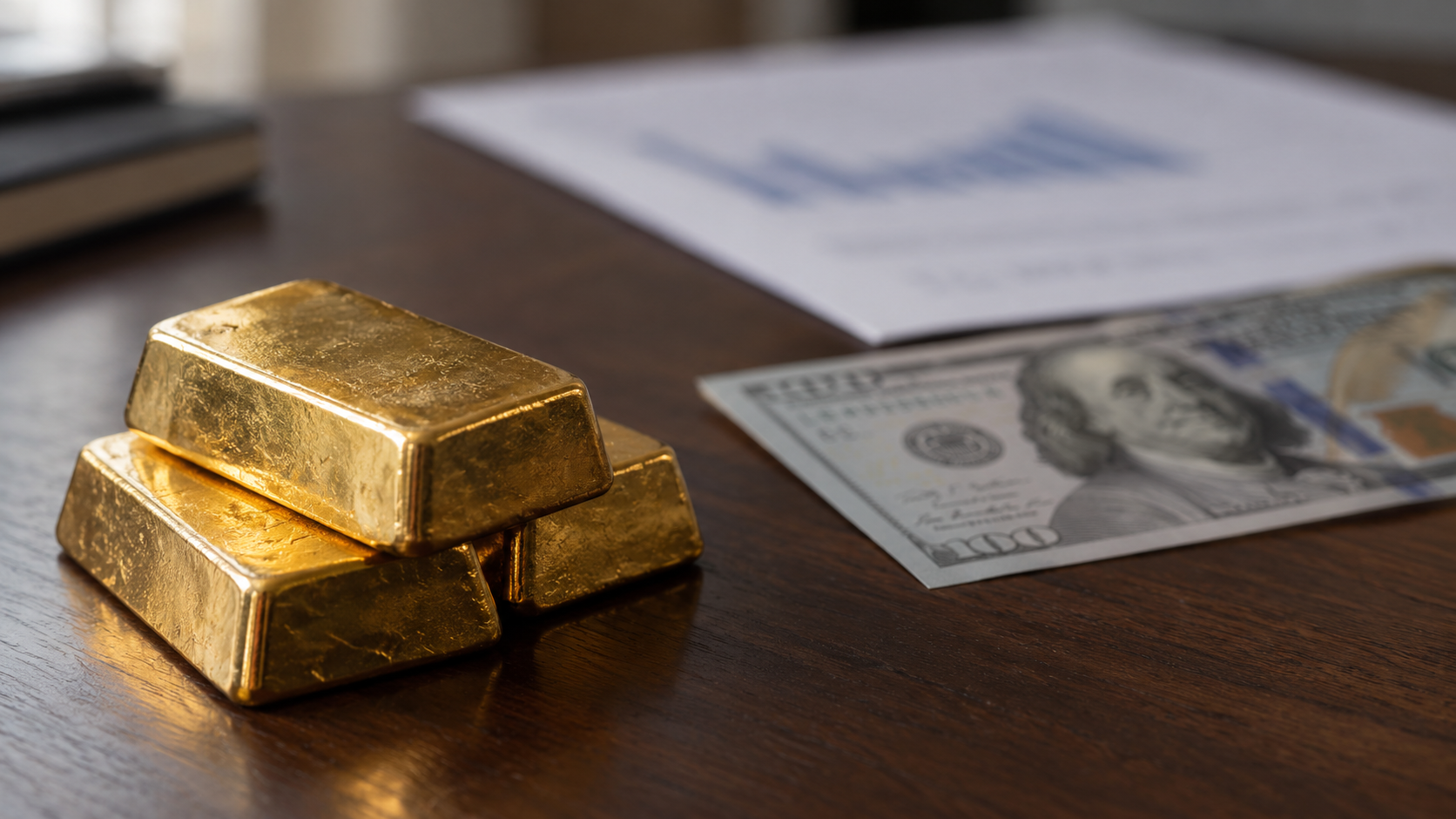
Forces that move gold and the dollar
Gold is commonly quoted in U.S. dollars per troy ounce, so the dollar is built into the most visible gold price. When the dollar changes against other currencies, the local-currency cost of the same ounce changes for buyers outside the United States. A stronger dollar can make dollar-priced gold more expensive in euros, yen, or other currencies even if the dollar gold quote is unchanged. A weaker dollar can have the opposite translation effect.
That pricing convention helps explain the familiar observation that gold and the dollar often move in opposite directions. It does not establish a fixed rule. Gold is a globally traded asset with its own investment, hedging, industrial, jewelry, reserve-management, and physical-market demand. The dollar is a currency whose value reflects relative monetary policy, interest-rate expectations, trade and capital flows, and demand for dollar liquidity. These forces can align, offset one another, or dominate at different times.
How the dollar reaches spot gold, futures and physical bullion
Spot gold is the benchmark for immediate delivery, while futures set prices for contracts calling for delivery at a later date. Both markets are substantially organized around dollar quotations. A change in the dollar can therefore alter overseas purchasing power quickly, affecting demand and hedging activity in spot and futures markets. Currency moves may also influence the choices of investors who compare gold with dollar deposits, Treasury securities, or other dollar-denominated assets.
Exchange-traded products can transmit these changes to a wider set of investors. Products backed by bullion seek to reflect gold-price exposure, subject to their structure and expenses, while other exchange-traded products may use futures or employ different strategies. Their trading price, holdings or contract positions, and investor flows are not identical measures. An inflow into a gold product may coincide with a falling dollar, but neither necessarily proves that one caused the other.
The retail bullion market adds a separate layer. A coin or bar buyer pays a dealer premium over a reference metal price, plus possible shipping, insurance, or tax costs. Premiums can widen when particular products are scarce, refining and distribution are strained, or retail demand is intense. As a result, the dollar spot price may fall while the final price of a specific coin changes little, or may rise, if its premium increases. Conversely, a higher spot quote does not guarantee an equally large change in the resale value offered by a dealer.
Forces that can push gold and the dollar apart—or together
An inverse move is most plausible when the dominant change is currency translation or relative attractiveness. If the dollar weakens broadly, gold may become more affordable to non-dollar buyers, supporting demand in dollar terms. If dollar cash returns or expected returns rise relative to alternatives, holding a non-yielding asset such as gold can appear less attractive, which can weigh on gold while supporting the dollar. These are tendencies, not mechanical outcomes.
Inflation expectations and interest rates require particular care. Gold does not pay interest. Its opportunity cost is often discussed in relation to interest rates and, more specifically, returns after inflation. But markets respond to expected paths, not merely to a single published rate. A rise in nominal yields accompanied by higher inflation expectations can have a different implication from a rise in nominal yields driven by expectations of tighter monetary conditions. Dollar movements may reflect the same changing expectations, yet the two markets need not react by the same amount or on the same timetable.
Demand for safety can make gold and the dollar rise together. During periods of financial stress, investors may seek highly liquid dollar assets and also seek gold as a store of value or portfolio diversifier. In that setting, a simple inverse-correlation story can fail. Gold may also respond to concerns about geopolitical risk, financial-system conditions, or confidence in currencies, while the dollar moves because of global funding demand. The shared driver is risk aversion, not a direct causal link between the two prices.
Central-bank activity is another reason the relationship can evolve. Central banks hold monetary gold as part of reserve assets, while reserve-management decisions also involve currencies and government securities. Changes in official-sector gold demand can influence the gold market without requiring a particular daily move in the dollar. Likewise, a dollar move driven by international capital flows may occur with little change in official gold demand.
What to compare before assigning a cause
For savers and bullion buyers, the relevant measure is often gold in their home currency and the all-in dealer price, not only the U.S.-dollar spot quote. Comparing the spot price, the applicable exchange rate, and the premium for the specific bar or coin separates metal-market movement from retail-market friction. Manufacturers may also need to distinguish the benchmark price used for procurement from currency exposure in revenues, inventory, and hedges.
Portfolio managers and policy researchers should avoid treating one correlation as a stable law. Useful comparisons include dollar-index measures or bilateral exchange rates, spot and futures gold prices, real and nominal yield measures, exchange-traded product activity, and indicators of physical-market premiums. The chosen dollar measure matters: a broad dollar index can move differently from a particular local currency, and the gold price can look different after conversion into that currency.
The central limitation is timing and causation. Markets incorporate expectations continuously, and the same event can affect gold, the dollar, yields, and risk sentiment at once. A stronger dollar may pressure gold through foreign-currency affordability, yet be accompanied by rising gold demand because of stress or official purchases. Gold and the dollar change because they share some drivers and have distinct ones; the relationship is informative only after identifying which force is leading in the period being examined.
Sources / References
- AN INVESTOR'S GUIDE TO THE GOLD MARKET (US edition) — U.S. Securities and Exchange Commission — Selected from an exact-topic research search for gold and the dollar; the document is relevant to the article's definition, data, methodology, or market-mechanics claims.
- Gold and the U.S. Dollar: An Evolving Relationship? - OpenMarkets — CME Group — Selected from an exact-topic research search for gold and the dollar; the document is relevant to the article's definition, data, methodology, or market-mechanics claims.